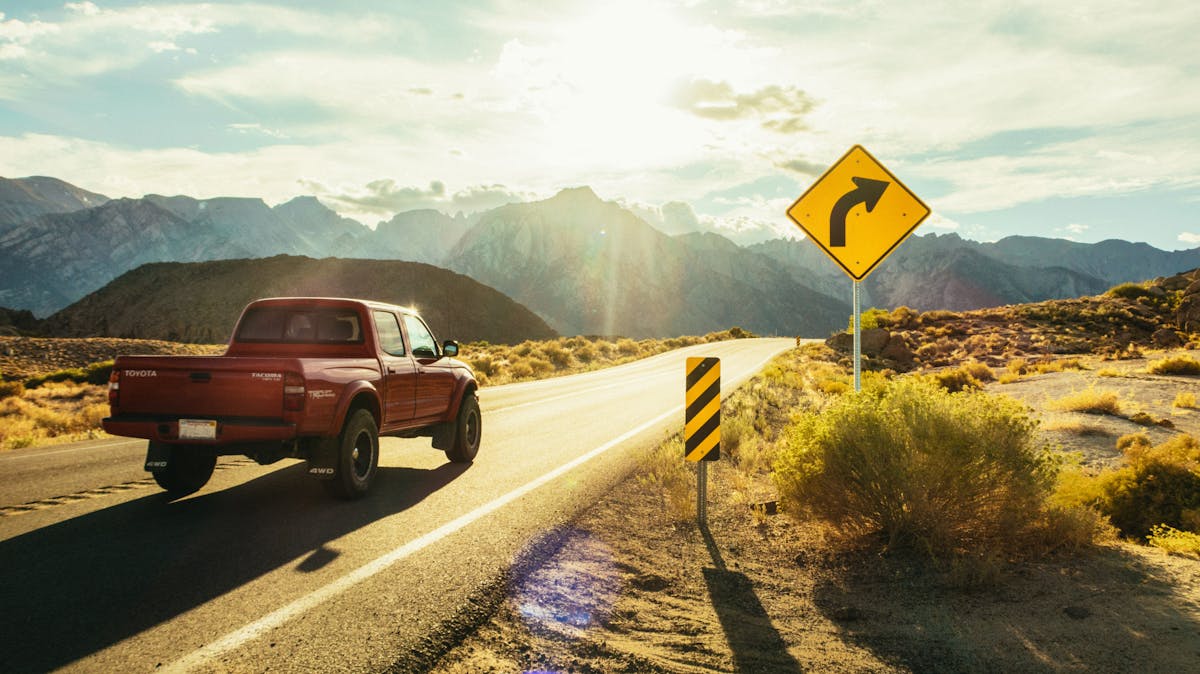
Introduction: Why JB4 on the Tacoma Hybrid?
The 2024+ Toyota Tacoma Hybrid represents a significant shift in midsize truck performance. With its turbocharged 2.4L i-FORCE MAX powertrain producing 326 hp and 465 lb-ft of torque from the factory, it's already the most powerful Tacoma ever made. But for those of us who live in the Pacific Northwest with its mountain passes and remote trails, there's always room for improvement.
Enter the JB4 piggyback tune. Unlike a full ECU flash, the JB4 intercepts and modifies sensor signals to increase boost pressure while letting the factory ECU maintain all its safety systems. It's a conservative approach to tuning that works with the truck's sophisticated hybrid system rather than against it.
Over the past few months, I've been running a JB4 on my Tacoma Hybrid while extensively logging data on mountain trips. This article represents what I've learned from analyzing thousands of data points, experimenting with different fuel types, and building custom conservative maps. If you're considering a JB4 for your Tacoma Hybrid, this data should help you make informed decisions.
Real datalog analysis from 700+ miles of mountain driving, timing pull patterns under different conditions, fuel octane experiments, custom map development, and practical fuel economy impact data. Everything here is based on actual measurements, not manufacturer claims.
Understanding Timing Pull: The Critical Metric
If you take one thing away from this article, let it be this: timing pull is the most important metric to monitor when running a piggyback tune. It tells you whether your fuel and tune combination is actually working or just adding stress to the engine.
What Is Timing Pull?
Ignition timing determines when the spark plug fires relative to piston position. Advanced timing (more degrees before top dead center) generally makes more power, but if combustion happens too early—especially under boost—it creates knock. The ECU constantly monitors for knock and will "pull" timing (retard it) when detected.
In JB4 datalogs, you'll see two key fields:
- Timing: The instantaneous ignition timing value
- Timing Avg: A rolling average of what the ECU wants to run
When instantaneous timing drops significantly below the average, the ECU is actively pulling timing due to knock detection. On the Tacoma Hybrid with adequate fuel, you'd expect to see timing hold in the 15-20° range under boost. When it drops to single digits or near zero, you're leaving significant power on the table.
At peak boost (18-21 PSI), I observed timing being pulled to 0° on 91 octane fuel. The ECU was requesting 17-20° but only giving the engine 0°. That's a massive knock response and indicates the fuel can't support the boost level, regardless of how conservative your JB4 map is.
The Learned Ignition Value
The JB4 has an adaptive feature called Learned Ign that builds a global timing correction over time. When the unit observes consistent timing pull, it incrementally reduces its boost additions to compensate.
A low Learned Ign value (like 0.1°) suggests one of two things: either you've been running excellent fuel with minimal knock, or the aggressive knock events are recent enough that the JB4 hasn't had time to adapt. In my testing, the latter was the case—despite seeing 15-20° of timing pull, the Learned Ign hadn't moved much because the events were concentrated in specific driving conditions.
Real-World Datalog Analysis
To understand how the JB4 performs on the Tacoma Hybrid, I analyzed datalogs from a round-trip mountain drive covering approximately 785 miles with significant elevation changes.
Timing Pull Analysis
Filtering the data for samples where boost exceeded 8 PSI revealed a consistent pattern: the ECU was aggressively protecting the engine by pulling timing under load.
The data shows that 84% of boosted WOT (wide-open throttle) samples recorded timing at 2° or less. At peak boost levels of 18-21 PSI, timing was consistently floored near 0°. This represents the ECU's aggressive knock protection at work—it's prioritizing engine safety over performance.
Contributing Factors
Several factors contributed to the aggressive timing pull:
- Fuel octane limitation: Running 91 octane premium, which is marginal for the boost levels achieved
- Altitude effects: Descending from 4,000 ft to sea level increases air density, making each PSI of boost more potent
- Intake air temperatures: IAT reached 105°F in the afternoon log, further reducing knock resistance
- Custom conservative map: Even with Map 6 capped at +1.5 PSI over stock targets, timing pull was severe
AFR (air-fuel ratio) remained solid throughout—averaging 14.5-14.6 at cruise and dropping to 11.1-11.7 under boost. This indicates the fueling is appropriate and the ECU's knock protection is working exactly as designed. The truck is protecting itself.
Fuel Requirements & E85 in Portland
The data made one thing clear: fuel octane is the limiting factor for JB4 performance on the Tacoma Hybrid. No amount of conservative mapping can overcome 91 octane fuel that can't support boost pressure.
The E85 Advantage
E85 (approximately 85% ethanol, 15% gasoline) offers roughly 105 octane equivalent. For a turbocharged application, this means:
- 5-8° more ignition timing under boost
- More consistent power delivery
- Cooler combustion temperatures from ethanol's charge cooling effect
- A less paranoid ECU that can actually utilize the tune's potential
Even a 20-30% E85 mix (often called E30) provides meaningful benefits over straight 91 octane. For those of us without flex fuel capability, carrying a few gallons of E85 for blending is a practical solution.
E85 Sources in Portland Metro
Finding E85 in Portland is challenging. The primary option is:
| Station | Address | Hours | Notes |
|---|---|---|---|
| Jay's Garage | 734 SE 7th Ave | Mon-Fri 7a-4p, Sat 10a-2p | Primary E85 source since 2007 |
| Propel (Beaverton) | Canyon Road | Standard hours | Worth calling to confirm availability |
Ethanol-Free Premium Options
If you're running the opposite direction—wanting pure gasoline without ethanol—here are west side Portland options:
| Station | Location | Octane | Est. Price |
|---|---|---|---|
| Space Age Fuel | 178th & Division | 92 | ~$4.79/gal |
| Olson Brothers | Hwy 99E, Milwaukie | 92 | Premium pricing |
| Carson Oil | Western Ave, Beaverton | 92 | Card lock |
For standard Top Tier premium (with ethanol), Costco consistently offers the best prices. The Tigard location has shown premium around $3.69/gallon compared to $4.00+ at most other stations. It's not ethanol-free, but the savings add up quickly.
JB4 Map Configuration Guide
The JB4 for the Tacoma Hybrid ships with several pre-configured maps and allows custom configuration. Based on my experience and data analysis, here's how I approach map selection.
Map Overview
| Map | Description | Use Case |
|---|---|---|
| Map 0 | Stock behavior, no boost adder | Datalogging baseline, fuel testing |
| Map 1-5 | Canned tunes with increasing aggression | Varies by firmware version |
| Map 6 | User-customizable | Custom conservative builds |
My Custom Map 6 Configuration
After analyzing the timing pull data, I built a conservative Map 6 with the following characteristics:
Even this conservative configuration showed significant timing pull, demonstrating that the limiting factor isn't boost level—it's fuel octane. The ECU will protect the engine regardless of how modest your tune is.
Running Map 0 (stock) up the mountain and Map 6 (+1.5 PSI) on the way down showed nearly identical timing pull behavior. The fuel quality is the bottleneck, not the tune aggressiveness.
Fuel Economy Impact
One of the most common questions about adding power to the Tacoma Hybrid: what happens to fuel economy? Here's what the data shows.
The key insight: the hybrid system's regenerative braking largely offsets the efficiency penalty from spirited driving. Coming down from 4,000 feet with regen active is essentially "free miles" that help balance the fuel cost of climbing.
My calculated fuel economy from fill-ups showed approximately 22.5 mpg for the trip—actually slightly better than EPA combined despite 30% of driving time in boost with Map 6 active. The truck computer's lifetime average of 16.8 mpg includes city driving, cold starts, and previous spirited driving that drag down the overall number.
Frequently Asked Questions
Yes, absolutely. While the stock Tacoma Hybrid can run on regular fuel, any tune that increases boost pressure requires 91+ octane. Without it, the ECU will pull timing so aggressively that you'll negate most of the tune's benefits while adding stress to the engine. For best results, consider E85 or E30 blends if available.
Not necessarily. The ECU pulling timing is a safety feature working as designed. It's detecting knock (or conditions that might cause knock) and protecting the engine. However, running consistently with heavy timing pull means you're not getting the performance you paid for and the engine is working harder than ideal. Better fuel is the solution.
Not recommended. Even on Map 0 (stock), the Tacoma Hybrid's turbocharged engine benefits from higher octane fuel. Running a JB4 tune on regular 87 octane would result in severe timing pull, no performance gain, and increased engine stress. Premium is the minimum; high octane or E85 is ideal.
Altitude changes air density, which directly affects boost behavior. At higher altitudes, air is thinner and the turbo works harder to hit the same PSI numbers—but each PSI produces less power. When descending to sea level, air density increases and each PSI of boost becomes more potent. The ECU compensates by adjusting timing and fueling, which is why you may see more timing pull at lower elevations.
It depends on your fuel availability. With 91 octane, even conservative maps like my custom Map 6 (+1.5 PSI) show significant timing pull. For daily driving on pump premium, Map 0 or a very mild Map 1 makes the most sense. If you have consistent access to E85 or high octane fuel, you can run more aggressive maps and actually realize the performance gains.
Continue the Conversation
Have questions about JB4 tuning on your Tacoma Hybrid? Want to share your own datalog analysis? I'm always interested in comparing notes with other owners.